

Marketing Strategy for East Valley Restaurants: A Practical Plan

Quick Summary
A marketing strategy for East Valley restaurants starts with one question: who is most likely to walk through your door next week? Keep the plan clear, written down, and reviewed monthly, with one main goal, named neighborhoods, two or three channels you can run well, and a monthly budget you can sustain.
- Pick one main goal, such as more weekday lunch guests, before choosing any channels.
- Draw a circle around your restaurant and list the nearby offices, schools, and apartments in it.
- Turn the three things guests say about you most into one clear promise.
- Track cost and new guests attributed for each channel every month, and shift money toward what produces first visits.
- Give each month one measurable outcome, such as new email signups or first-time guests from a specific neighborhood.
Table of Contents
- Building a Restaurant Marketing Plan for the East Valley
- Defining Your Target Audience by Neighborhood
- Positioning Your Brand Against Nearby Restaurants
- Setting a Restaurant Advertising Budget That Fits Your Size
- Improving Restaurant Local SEO and Google Business Profile Visibility
- Choosing Channels: Social Media, Email, SMS and Delivery Platforms
- Building a Local Marketing Calendar and Community Partnerships
- Restaurant Customer Retention Strategies That Turn First Visits Into Regulars
- Your Next Step: Mapping the First 90 Days of Your Plan
- Frequently Asked Questions
Building a Restaurant Marketing Plan for the East Valley
Last Updated: November 21, 2026
A solid marketing strategy for East Valley restaurants starts with one plain question: who is most likely to walk through your door next week? Rain Visual Strategy / Design helps local businesses answer that question with clarity.
Here is the good news. A marketing plan does not need to be complicated. It needs to be clear, written down, and reviewed each month.
- Pick one main goal, such as more weekday lunch guests
- Name the neighborhoods you want to reach
- Choose two or three channels you can run well
- Set a monthly budget you can keep up
A common mistake is trying to do everything at once. Start small and build from what works.
Defining Your Target Audience by Neighborhood
Your audience is not “everyone in the East Valley.” It is the people living, working, and driving within a short distance of your restaurant. Mesa, Gilbert, Chandler, and Tempe each have different eating habits and different schedules.
Map Your Trade Area
Draw a simple circle around your restaurant.
- Note nearby offices, schools, and apartment complexes
- Check which areas already send you reviews or orders
- Look for gaps, such as families in a neighborhood that has no sit-down options nearby
Match Offers to Each Group
Office workers want fast lunch options. Families want kid-friendly dinners. Weekend visitors want an experience worth the drive. Write one sentence for each group describing what they want from you.
Positioning Your Brand Against Nearby Restaurants
Diners rarely compare restaurants on food alone. They compare on feeling, convenience, and what they expect before they arrive. See how branding drives foot traffic for a closer look. Your brand should answer one question clearly: why choose you over the place next door?
Defining that answer can start with a simple exercise:
- List the three things guests say about you most often
- Remove anything every other local option also offers
- Turn what remains into one clear promise
That promise then shows up everywhere: your logo, your menu design, your window signage, and your online profiles. Consistency builds recognition. Recognition brings people back.
Setting a Restaurant Advertising Budget That Fits Your Size
Most independent East Valley restaurants do not need a large ad budget. They need a budget they can actually sustain for six months and a clear order for where the money goes. The exact percentage depends on whether you are opening, holding steady, or trying to grow a second daypart.
A Simple Allocation Framework by Restaurant Size
Use these as starting proportions, not fixed rules. They assume you are doing most of the work yourself or with one part-time helper.
- New or opening restaurant (first 12 months): Put the largest share toward local search visibility and your Google Business Profile, then your website and online ordering, then a small amount toward social content and a grand-opening or soft-opening push.
- Established single location, steady traffic: Split the budget between retention (email, SMS, loyalty) and acquisition (local search, social, a few community sponsorships).
- Multi-location or high-volume East Valley operator: Add a line for delivery-platform promotions and a test budget for new channels, and keep a reserve for seasonal pushes such as holiday party season and summer patio promotions.
Where the Money Usually Goes
A practical monthly split for a small independent can be prioritized in this order:
- Google Business Profile photos, review responses, and local search basics (often low or no direct cost, but time-intensive)
- Website and online ordering maintenance so guests can act on what they see
- One primary social channel with consistent food and event content
- Email or SMS for regulars
- A small test line for sponsorships, events, or a new channel
Avoid spreading a small budget across too many channels at once, since a thin presence on every platform makes it hard to know what works.
Tracking Spend Against New Guests
Track two numbers per channel each month: cost and new guests attributed. Ask new guests how they found you at the counter or in the online order form, and compare that against platform reports. Shift money toward whatever is producing first visits, not just clicks or impressions. To judge whether brand strategy investment pays off, compare that return against your overall spend. Keep a small test budget each month so you can try one new idea without disrupting what already works.
For current pricing on design, branding, or campaign support, contact Rain Visual Strategy / Design directly for a quote based on your goals.
The article’s budget guidance by restaurant type, summarised so you can compare the starting proportions at a glance.
| Restaurant type | Where the budget goes first | Note |
|---|---|---|
| New or opening (first 12 months) | Local search and Google Business Profile | Largest share of budget |
| Established, steady traffic | Retention and acquisition | Split between email, SMS, local search and social |
| Multi-location or high-volume | Delivery promotions and a test budget | Keep a reserve for seasonal pushes |
Improving Restaurant Local SEO and Google Business Profile Visibility
When someone searches “best tacos near me,” Google shows a short list drawn from your Google Business Profile.
Focus on the basics first:
- Keep hours, address, and phone number accurate
- Add fresh photos of food, space, and team every month
- Reply to every review, positive and negative
- Use the right categories and a clear description
Your website matters too. Make sure it loads quickly on phones and shows your menu, location, and ordering options without extra clicks.
Choosing Channels: Social Media, Email, SMS and Delivery Platforms
You do not need every channel. Pick the ones your guests already use.
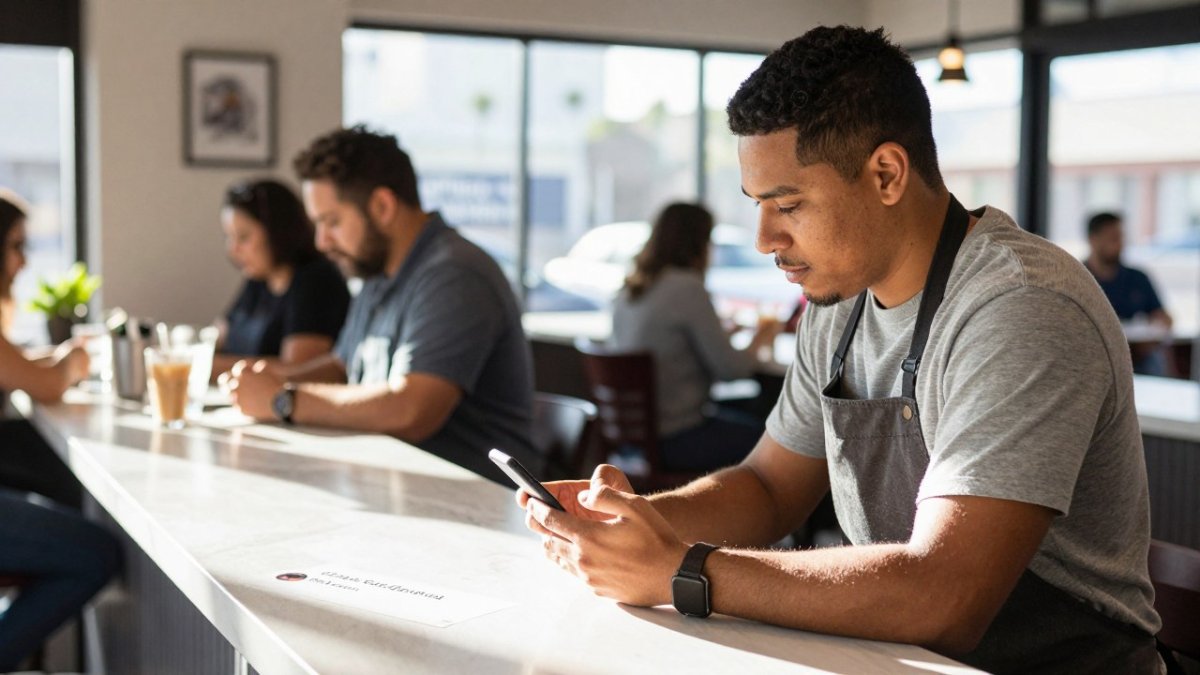
!Restaurant owner reviewing social media posts and guest reviews on a smartphone at a sunlit counter in a busy East Valley dining room
- Social media: Best for showing food, events, and daily specials
- Email: Best for regulars and special offers
- SMS: Best for short, time-sensitive messages like same-day deals
- Delivery platforms: Useful for reach, but fees can cut into margins, so consider building your own ordering channel
Start with one primary channel and one support channel. Add more only when the first two run smoothly.
Building a Local Marketing Calendar and Community Partnerships
Most restaurant marketing advice treats the year as a generic sequence of holidays. East Valley restaurants run on a different rhythm: extreme summer heat, a large winter visitor and snowbird population, school calendars across Mesa, Gilbert, Chandler, and Tempe, and spring training and event traffic that shifts by city and by week.
A Practical East Valley Marketing Calendar
Use this as a starting frame and adjust to your cuisine and location.
- January-March: Winter visitors and spring training bring new faces. Refresh your Google Business Profile photos, make sure your hours reflect event-day traffic, and run a welcome offer for first-time guests.
- April-May: Patio season is still comfortable. Promote outdoor seating, happy hour, and pre-summer menu changes before the heat arrives.
- June-August: Heat slows patio and walk-in traffic. Shift emphasis to online ordering, delivery, family meal deals, and indoor events. This is the best time to run a loyalty push aimed at regulars rather than trying to attract new drive-by guests.
- September-October: Back-to-school and returning locals. Re-engage lapsed guests with an email or SMS win-back message, and reconnect with school and youth-sports groups for fall sponsorships.
- November-December: Holiday party season and gift-card season. Book group events early, promote catering and gift cards, and plan staffing and inventory around the holiday calendar rather than the marketing calendar alone.
Watch out: do not plan promotions without checking the school and event calendars for the specific cities you serve. A Gilbert school break and a Tempe campus schedule can pull traffic in opposite directions in the same week.
Community Partnerships That Fit East Valley Neighborhoods
Partnerships work best when they are tied to a specific community rather than a broad sponsorship. Consider:
- Youth sports and school groups in Mesa, Gilbert, Chandler, and Tempe, where team sponsorships and fundraiser nights reach families directly
- Nearby businesses such as gyms, salons, and offices for cross-promotion, especially in office-heavy corridors where weekday lunch traffic matters
- Community and cultural organizations for neighborhood nights, charity fundraisers, and culturally relevant menu moments that reflect the actual makeup of your trade area
- Event organizers for farmers markets, festivals, and local races where a food booth or catering partnership puts you in front of new guests
Making the Calendar Measurable
Give each month one primary goal and one measurable outcome, such as new email signups, online orders, or first-time guests from a specific neighborhood. Review the calendar monthly and note which local events actually moved traffic.
Restaurant Customer Retention Strategies That Turn First Visits Into Regulars
Getting a first visit is only half the job. Keeping that guest coming back is where long-term growth comes from.
Try these approaches:
- Ask for an email or phone number in exchange for a small reward
- Thank first-time guests with a personal follow-up message
- Create a simple loyalty program with visible progress
- Invite regulars to tasting nights or menu previews
Watch out: a loyalty program that is hard to understand or redeem will frustrate guests and hurt trust.
Your Next Step: Mapping the First 90 Days of Your Plan
Use the next 90 days to put your plan into motion. In month one, define your audience and fix your Google Business Profile. In month two, launch your primary channel and set your budget. In month three, review what brought in new guests and adjust.
Rain Visual Strategy / Design helps East Valley restaurants turn that plan into a clear brand and marketing system aimed at growing foot traffic. Reach out to learn more and start building your strategy today.
Frequently Asked Questions
What are some examples of marketing strategies for restaurants?
Effective restaurant marketing usually combines a few channels rather than one. Common examples include keeping your Google Business Profile accurate with fresh photos and hours, asking recent guests for online reviews, running social media posts that feature daily specials, sending email or SMS offers to a loyalty list, and partnering with nearby businesses or local events. Start with two or three of these, track which ones bring guests through the door, and expand from there. The right mix depends on your concept, your neighborhood and how much time your team can give each week.
How much should a small restaurant spend on advertising?
Pricing and spend depend on your location, competition, channels and how many guests you need to add each month, so there is no single correct number. A practical approach is to set a fixed monthly budget as a share of expected revenue, test it on one or two channels for 60 to 90 days, and adjust based on measured results such as reservations, online orders or redemptions of a promotion. For current pricing on any advertising or design services, check with the provider directly or request a quote.
How can a restaurant improve its local search visibility?
Start with your Google Business Profile. Confirm your name, address, phone number, hours and categories are correct, upload current photos of food and the dining room, and post updates about specials or events. Encourage satisfied guests to leave reviews and respond to every review, positive or negative. Make sure your website lists the same business details as your profile, and that your menu and hours are easy to find on a phone. Consistent local listings across directories also help search engines confirm where you are.
How can restaurants encourage first-time diners to come back?
Follow up within a few days of a first visit with a simple thank-you message and a reason to return, such as a second-visit offer or a new menu item. Collect contact details at the table or through an online ordering account so you can reach guests with email or SMS. A loyalty program with a clear, easy reward tends to work better than a complicated one. Track repeat visits so you can see which follow-up actions actually bring people back.

Comments are closed.